In the spirit of
sharing something on #FrancoFriday(s), I'll contribute the minor fact
that while I've been pretty good at keeping up-to-date on
Redemption's / Kino Lorber's Blu-ray releases of this mad genius'
work, I have found myself at a sever lack for time. Sitting in
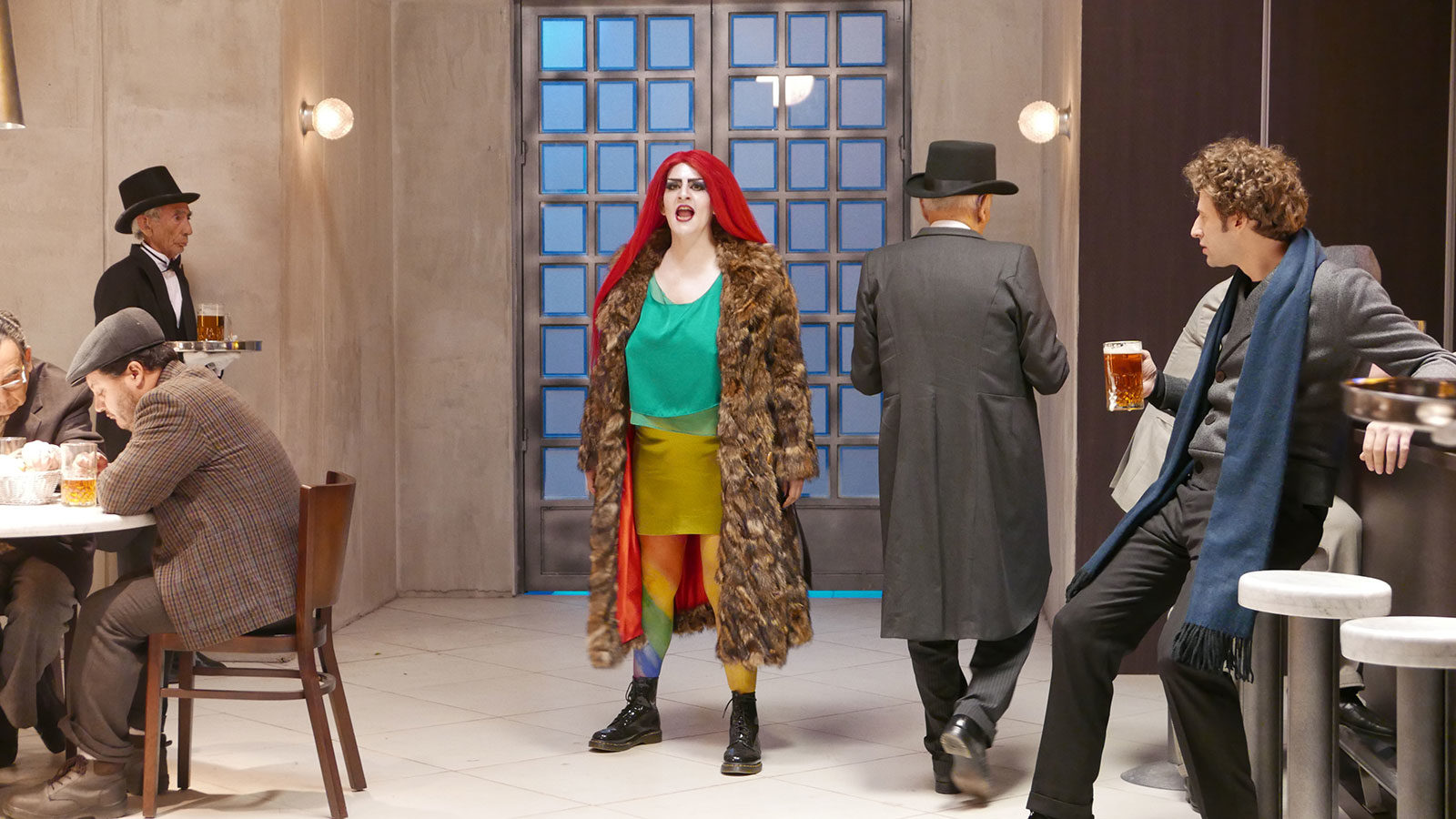
waiting are two classic Franco films, the re-working of the Countess
Bathory legend as a Rock-Horror opus (featuring the titular band in
starring roles), the Killer Barbys. To me, this was hands-down the
most accessible film in gaining entry into Franco's bizarre world of
nearly indefinable cinema (and for me this was back in the early
2000s), and Killer Barbys still holds a nostalgic place in my heart
to this day, despite its repetitive shots and extended scenes of
nothing-really-happening which are intended to pad out the running
time. At least the shot repetition is set to an energetic pop/rock
soundtrack. The other cool Kino Lorber/Franco release is the
Diabolical Dr. Z, Franco's wildly stylish black-and-white
pre-make/predecessor to his
more-adored She Killed in Ecstasy... but this crazy and kitschy
original is without a doubt well worth a look. I'm looking forward to
these two films being my own double-feature Franco retrospective,
which will be happening as soon as I have the chance to carve out
some time in the next week or so. Damn it, what's happened to all of
my time?! #JessFrancoFriday
Friday, April 27, 2018
Sunday, April 15, 2018
“She's So Lovely”...
Sometimes
a complex and thoughtful film will offer a clue, often as a
throw-away line within a deceptively mundane seen, towards the deep
truths and meaning held within the film author's wholly intended
expression...
The
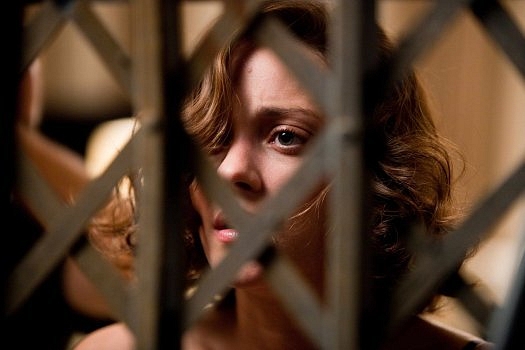
single most important line in the film Inception, a
thoroughly thought-provoking film written and directed by Christopher
Nolan, follows Ellen Page's antagonistic inter-subconscious run-in
with Marion Cotillard, in one such seemingly mundane scene where
Page's character is speaking with Joseph Gordon-Levitt, and she asks:
“What
was she like in real life?”
Here,
Gordon-Levitt pauses before answering, “She was lovely.”
This is the exact point where the entire explanation of the film
should come into focus. But before I can explain this, let's take a
look backwards at the situational aspects of these characters:
Marion Cotillard is the dead wife of widower Leonardo DiCaprio.
Joseph Gordon-Levitt is the longtime friend and business partner of
Leonardo DiCaprio.
Leonardo DiCaprio runs a freelance business, based on his own
research and development of invading interfering in peoples'
subconscious version of their own 'selves'.
When Ellen Page's character asks the question, “What was she
like in real life?”, Cotillard's character would be thus far
setup to appear as a confrontational, somewhat unlikable character.
And at this point, if more exposition is required for you to
understand what's been set up for the film, then it would be better
if you watched the film before proceeding...
Whist in a training session, Page enters DiCaprio's subconscious
mind, which is where she ran into Cotillard, who is in a twisted way,
acting as a stereotypical jealous ex-wife, is presented as
“defending” DiCaprio's psyche from invasion. Hence the
aforementioned antagonistic inter-subconscious clash. But if we dig
deeper into this allegorical presentation, what is really going
on here? With Cotillard's character having already maliciously
thwarted at least one of DiCaprio's subconscious business endeavours
(and thusly putting the protagonist dream team in actual, physical
peril), can we then take a deeper inspection of this subconscious
relationship between DiCaprio's and Cotillard's characters and
decide, with the information that we're given by Nolan in his own
film, that DiCaprio's character is holding some sort of grudge
against Cotillard's character – or, perhaps, his subconsciously is
more widely seeing her in a negative light? I think the answer to
both halves of this question is YES. And again, herein lies part of
the key to solving the puzzle of Inception...
Throughout Inception, DiCaprio's and Cotillard's children are
involved as a motivational factor – DiCaprio must make it back to
America, from France, so that he can reunite with his children –
children whose faces are never fully realized within DiCaprio's mind,
indicating guilt and regret at being a non-present father, and also
indicating DiCaprio's wishes to redeem himself in this regard. So,
then, who does DiCaprio's character point his subconscious finger at
as being the “bad guy”? His wife and the mother of the children –
Cotillard's seemingly aloof character. And this is where the answers
and true theme of Nolan's film really start to shine out, if, as
audience members, we're willing to dig until we get to this fracted
light.
Like any human being(s), becoming the victims of the mundanity of
life is a psychological danger that resonates. Falling victim to this
is quite severe in the sense that we start to loath our ourselves,
our loved ones, and then perhaps start to blame these loved ones for
our own insecurities, and our own shortcomings. Like being an
absentee father. And like Sidney Poitier said in To Sir, With
Love, “Marriage is no institution for the insecure”. So then,
we start to build a subconscious reality where we can comfortably
shift our blame. The real challenge is to be able to destroy – and
to allow the destruction of – this subconscious world. In Nolan's
vision, DiCaprio's subconscious world is at least rotting and falling
apart, indicating his willingness to accept the idea that he's
merely blaming his own wife for his paternal shortcomings.
The character played by Ken Watanabe represents (directly), within
his dream-setting, the subconscious-invaded-by-DiCaprio's
consciousness (and this explains the opening shot of DiCaprio waking
up dazed on a beach, or, the initial “awakening” of his
character, both subconsciously and in reality), and he also
represents indirectly the symbolic aspect of DiCaprio's
own character – if he, DiCaprio's character, doesn't save Watanabe
(in essence, himself), then he'll grow old and become lost in
how own blame-and-guilt-soaked subconsciousness. Here, Watanabe is
the insertion of the objective correlative in Nolan's movie.
Or in other words, symbolically speaking, DiCaprio's character is
Watanabe's character. DiCaprio is waking up, mentally, in order
to be able to wake himself from the deep slumber of his own guilt and
inaction.
So then, in the aftermath of this initial “awakening”, we come
back to the proverbial ground-floor of Nolan's cinematic puzzle (and
it is a puzzle, as Nolan left it “up to the audience” whether
DiCaprio's experience was taking place in the real world on in a
subconsciously-manufactured reality...) – Constructed in its
purely subconscious form, DiCaprio's character, dealing with emotions
of guilt, loss, and regret, and avoiding self-realization and the
responsibility and results of his own actions (i.e. the
neglect of his children), he shifts this blame to his wife Cotillard
(whom, in real-reality, is “Lovely”, which is spoken by
Gordon-Levitt's character but is also a true notion buried deep
within the “defence” psyche of DiCaprio's character). Somewhere
outside of the borders of this cinematic tale, DiCaprio's character,
finally realizing that this subconscious subterfuge can't last, even
in the state of dream, he creates an escape scenario (the action of
the film); and following this, he “awakens” on the shores of a
finally ebbing dream-tide; now finding himself physically and
mentally enabled enough to save the Watanabe character – i.e
himself. The final frames of Inception are now just the full
waking of DiCaprio's dream-world, the final images before our eyes
flutter open to the morning light after a night of dream-epiphany, to
an ending that has been hinted throughout Nolan's cinematic vision
through flash-forward repeating shots. And although the focus of the
story (the dream) was placed on the foggy memories of his children,
DiCaprio's ultimate boon, after his own internal redemption (which on
all levels of the story's “reality” is what Nolan's film is all
about), is that he will likely be able to stand with his lovely wife
in his perceived and genuinely desired forgiveness from her.
~V.
Sunday, April 08, 2018
Their Later Films Vol. 5 – Alejandro Jodorowsky.
Outside of Hollywood's most fanous cinematic releases, it's the
auteurs whose films people really remember seeing for the first time.
Argento, Romero, Bava, Fulci, Franco, Tarantino, Rodriguez, Lynch,
Carpenter, and several others... but perhaps it's the surrealists
that we really remember because, well, the films are fucking
weird – and inspiring, on many levels (intellectually, emotionally,
creatively)... Hands down any cinephile I've ever conversed with
remembers the first David Lynch, David Cronenberg, Dario Argento, and
Alejandro Jodorowsky film they ever saw; usually because it changed
their lives. I was a late-comer to the world of Alejandro Jodorowsky,
having discovered him roughly a year-and-a-half before the first film
in his new (intended) trilogy was released, Dance with Reality –
but I'll get back to that film in a moment.
Funnily, it had all started with 2005's Masters of Horror
television series, created by Mick Garris. The film (episode?)
that would launch Garris' horror anthology series would be Cigarette
Burns, by John Carpenter, in which a sort of film detective
(played by a pre-Walking Dead Norman Reedus, fresh off of
Guillermo Del Toros' Blade II) is hired (by Udo Kier) to track
down a lost film; a movie that caused bloody riots upon its festival
release and sent the enigmatic director into hiding. I don't know why
I thought this at the time, but I felt, somewhere deep in my
cinematic heart, that John Carpenter's Cigarette Burns was
fictionally referring to Alejandro Jodorowsky. Upon seeing
Carpenter's episode, I went out and purchased the then-new Alejandro
Jodorowsky DVD boxset from Anchor Bay. And upon this purchase, I
threw his first film, Fando y Lis, into the DVD player – a
surreal, black-and-white, sexualized travel-epic. But I truly
digress, as this essay is not about the first Jodorowsky film I ever
watched – as I'd said, this is about the first time I actually
discovered Jodorowski, and that wasn't until 2012, when I
witness, for the first time (and from that very boxset), The Holy
Mountain...
Following the life-changing experience of Jodorowsky's The Holy
Mountain, Vancouver's Cinemateque held a retrospective of
Jodorowsky's work, where I went both backwards and forwards in the
filmmaker's stunning career – first, having the pleasure of
experiencing El Topo in the cinema, and then experiencing
Vancouver's first theatrical screening of his 2013 film, Dance of
Reality. This latter film was not like Jodorowsky's previous
Fando y Lis, El Topo, or The Holy Mountain, yet no less
important as those films because Dance of Reality so
thoroughly infused Jodorowsky's own life and perspectives into the
over-the-top and transgressive drama that had been his signature
trademark throughout his career that Jodorowsky actually managed to
recreate himself as a professional artistic filmmaker at the point in
his life when most cinematic auteurs were well on their way downhill
to artistic and commercial failure. He hired his son to play his
father, and gave us a genuine life sentiment in the midst of a
surreal cinematic experience that flirts with exploitation but in far
more comfortable in arthouse, but in the end is a rich visual
exposition of truth and things that we, as human beings, might prefer
to keep buried under a shallow pile of earth.
There are few filmmakers that can manage to evoke emotional and
intellectual engagement in their films that seem to transcend the
mere opinions of the mainstream (or rather, those who control the
mainstream media content), and Jodorowsky is one of the three – the
other two being Lloyd Kaufman of TROMA Entertainment, the
longest-running independent movie studio... well, ever; whose
latest films Poultrygeist and Return to Return to Nuke 'Em
High aka Vol. 2 epitomize his wildly outrageous and directorial
and creative career with astounding over-the-top satirical and
meaningful anti-conformist showcases contained as exploitation cinema
(although anything of Kaufman's from Tromeo and Juliet forward
is worth delving into if you're game to be exploring in this arena);
and the director of the Mad Max films George Miller, whose latest Mad
Max: Fury Road showed that this stratospheric auteur could not
only deliver a surrealist, artistic, and exploitive film to
international audiences (and with immense praise), but could also
receive industry and commercial accolades in doing so. In one UK film
critic's opinion, Mad Max: Fury Road was the “Movie of the
Century”. I could be close to agreeing with this reactive
sentiment. For all of this appreciation, it might be worth noting
that Jodorowsky, Kaufman, and Miller were all in their seventies
while enjoying these artistic successes; and in the case of all three
of these auteurs' latest movies, each one of them at some point
reminded me of each others' works.
After Dance of Reality, Jodorowsky had the opportunity,
thanks to crowd-funding platforms, to create the second film in his
late-life trilogy, Endless Poetry, which premiered at
international film festivals in 2016. In this latest film Jodorowsky
leans towards the far-more personal aspects of his life, and so
Endless Poetry is far more autobiographical than even Dance
of Reality – this time, not only does Jodorowsky's son play his
father, but his grandson plays himself. The actress who played his
mother in both films, Pamela Flores, also plays his life-changing
girlfriend in Endless Poetry in a dual-role. Here we also get
emotional closure between the father/son characters, as well as some
closer in regards to what made Jodorowsky make the life choices that
he acted upon, and it brings up some personal regrets, which he
directs his real-life son and grandson to act out in front of the
camera. Endless Poetry could be Alejandro Jodorowsky's most
mainstream-accessible film, but really, without the history of his
films, would it really have the same meaning...?
~V.
Fury Road...
Lloyd Kaufman's brilliant "Return to Return to Nuke 'Em High aka Vol. 2"...
Endless Poetry...
Tuesday, April 03, 2018
Their Later Films Vol. 4 – Dario Argento.
Argento's colorful career in horror/thriller cinema began with the
violent murder mystery The Bird with the Crystal Plumage,
which ignited a wild fever for post-sixties (post-Bava) giallo films
in Italy and made Dario Argento an international filmmaking star.
Riding a hugely impressive creative high beginning with Deep Red
(Profondo Rosso) and Suspiria (1975 & 1977) and
continuing through Inferno, Tenebrae, Phenomena (Creepers), his
work in the flashy and exciting giallo genre arguably peaked in 1987
with Opera (Terror at the Opera). Well, whether one believes
Opera to have been Argento's creative peak or not, there is no
denying that his lush style and over-the-top camera trickery was
toned down in his subsequent films, Trauma and The Stendhal
Syndrome. For me personally, I believe Argento's creative genius
continued up until The Stendhal Syndrome (1996), it was this
film that marked the last in Argento's reliable cinematic era, and
following this, his films became more and more subdued and/or
erratic, in the context of his overall giallo catalogue. Of course
many fans maintain the point where his creative train was diverted to
a diffident set of tracks was his work post-Opera, and fair
enough, stylistically Opera is a force to be reckoned with.
Post-Stendhal Syndrome, though, we have a myriad of weird
misfires and comebacks from the man once dubbed the “Italian
Hitchcock”. Sleepless was primed to mark a creative comeback
for Argento in the new millennium, Sleepless celebrated the
style, the sexuality, and the bloodletting of Argento's best gialli
from his glory years, and fans would hope for this success to
continue, creatively speaking, as the prolific filmmaker continued to
get his genre films produced in Italy. On fortunately, this was not
to be the case, and to follow Argento's next series of gialli would
be like riding a dizzying rollercoaster. From the appallingly
pedestrian The Card Player to the successful Do You Like
Hitchcock?, which was made for Italian television, it was getting
harder and harder to get a grasp on the filmmaker's later body of
work. While all three are no doubt giallo films, Sleepless, The
Card Player, and Do You Like Hitchcock? couldn't be more
stylistically apart from each other. And at this point in the
director's career, Do You Like Hitchcock? (2005) would mark
the end of the second chapter, artistically speaking, before he moved
onto more television projects with Mick Garris' “Masters of Horror”
series, where Argento would direct two stunning one-hour films,
Jenifer and the gory Pelts, seemingly back to his old
creative self once again. In fact, while returning filmmakers
John Landis and John Carpenter were toning down their second entries
in the “Masters of Horror” series, Argento was ramping his blood
and thunder up. Argento's “Masters of Horror” episodes
were segues into his third, and most dividing chapter in his
cinematic works.
Dario Argento's latest films, Giallo, The Mother of Tears (The
Third Mother), and Dracula 3D, have had most fans feeling
luke-warm – far from his best works, his last three films aren't
exactly terrible, but when compared to his films from the seventies
and eighties, we start to wonder how much of his stylistic decline is
the fault of the creator, and how much lies with the changing, and
likely frustrating demands of Italian and international film and
television expectations. Indeed Argento himself has spoken about the
diminishing lack of style in his own films in relation to the
anti-cinematic requests of the studios producing his films in the
later years, beginning with The Card Player. One key thing
about the latest of these films, Dracula 3D, is that it
reunited the actress-daughter with the director-father, on the tip of
Asia Argento's retirement from acting altogether. Prior to this, The
Mother of Tears (which also starred Asia Argento) was
actually a fast-paced, gory, and exciting apocalyptic supernatural
horror tale, mixing the best of Argento's Inferno, Demons and
The Church – until it wrapped up an a mind-boggling
ridiculous turn... and the purposely-designed giallo vehicle titled,
well, Giallo, was nowhere near as bad as the majority of fans
and critics had made it out to be. As said, not his best work, but
there are still many merits to Agento's final giallo film, including
some fantastic art and production design and attractive performances
by international actors Adrien Brody, Emmanuelle Seigner, and the
lovely Elsa Pataky. If anything lets this films down it's Argento's
cinematic portrayal of the antagonist – the killer seems like he'd
be more at home in a William Lustig movie. Not exactly a coordinated
opera of photographic style and blood & gore like the films from
Argento's early-to-mid career, I would still highly recommend Do
You Like Hitchcock?; meanwhile Giallo and Mother of
Tears might not be as bad as some fickle audience members might
have us believe – after all, weren't we far more forgiving as an
audience, and as fans, to Argento's cinematic quirks and stylish
blunders in the 70s and 80s?
--V.
(Sleepless)
(Do You Like Hitchcock?)
(Jenifer)
(The Mother of Tears)
(Giallo)
Sunday, March 25, 2018
Shit from the Thrift Store – 1.
“Shit
from the Thrift Store” is a blog series on thrift-store-bought
DVDs that came to me in the shower one morning, about a week after
having exhaustively written and scheduled 17 articles for the
Delirious Cinema blog and 1 horror article for the next Absolute
Underground – apparently my sleep-deprived brain felt it needed
even more to tackle, so it went on making more things up to do
without so much as a consultation. But I thought this might actually
be a fun sideline for film-writing, as I had been sidestepping into
the Thrift Store on my way downtown sporadically (when I've been able
to waste a few minutes without completely missing the seabus from
North Vancouver to downtown) – and in a self-conceived notion of
competition, I've used said time to feed the friendly competition
that probably exists only in my own mind between myself, finding the
best,out-of-print DVD and forgotten cinema gems, and my
friend-slash-imaginary-competition who runs an online webstore for
sought-after DVDs and VHS tapes. Said friend seems to have more luck
than I do acquiring the really cool stuff from the same couple of
thrift stores the exist around the Lower Lonsdale area (or LoLo, as
the local businesses call it), but I'm not just in it for the
competition – no, I'm in it to find those forgotten-about nuggets
of something special from the Hollywood and Canadian Tax Credit films
of yesteryear. And indeed, I always keep the corner of my eye
sharpened for those little slices of culture and film that I may have
missed the first time around – you know, things like Staying
Alive and Flashdance.
Although
never having seen either of these films, I retain a childhood memory
(which admittedly may have gotten warped, somewhat, over time) of
both of these films, plus John Landis' Trading Places,
having been fake-reviewed in a
Mad Magazine spoof of Siskel & Ebert's movie review show which
was on the air in 1983, “At the Movies”. Two things always struck
me about Staying Alive, other
than the fact it is a direct and official sequel to the
late-seventies hit that made John Travolta a Hollywood superstar –
Saturday Night Fever – and
that is 1.) it was directed by Sylvester Stallone, and 2.) is appears
to thoroughly and unapologetically exploit John Travolta, as he
appears in all of the film's promotional stills mostly naked, mostly
sweaty, quite oiled-up, and pretty damned ripped. (When did he do
Blow Out again?
Before? After? Anyway, he was pretty popular around this time. Which
reminds me, I still need to see Perfect, which
also starred Travolta alongside Jamie Lee Curtis, which is probably
another entertaining take Hollywood take on how narcissism will get
you everything). Where was I? Whatever, I can move onto Entertaining
and Narcissistic.
In
fact, Stayin' Alive is
sort of an exercise in Hollywood meta-narcissism – as it's a
bizarrely narcissistic story about a narcissistic character told by
Sylvester Stallone himself, who somehow manages to ooze his very own
style of narcissism, which used to be somewhat attractive in the
1980s. In Stayin' Alive, Travolta's
Saturday-Night-Fever character flip-flops between two intimate
relationships between two women, neither of whom seem to mind his
promiscuous wishy-washiness in regards to either relationship, while
he unscrupulous climbs over his professional peers to gain a top spot
in a high-profile Broadway dance-musical – and we're meant to be on
his side through his unprincipled “dilemmas” as the movie asks
(expects) us to see this all as some sort of existential crisis that
he's going through (and we are on his side, because aren't we all
just a tiny bit narcissistic ourselves? Well, it is the 1980s, and
Travolta is a little bit irresistible, even if he spends half the
film in his tighty-whities).
So
what of Flashdance?
Surely the alluring girl form the wrong side of the tracks with the
heart of gold who only wants to dance her way to success isn't a
Regan-era narcissist, is she? Well, I'm still mulling over an inner
debate about that one, but it seems to me that the movie was telling
me that if you are this type of girl, then you'd better find an older
and slightly more experienced white male to fall in love with you so
that he can help you out by pulling some strings on your behalf in
that prestigious dance academy to get you that major audition that
will launch your professional career, or else don't bother, because
you'll probably just become a stripper like your old friend Jeanie.
The
really amazing thing here is that both Staying Alive and
Flashdance are
actually two wildly entertaining films – because Hollywood in the
1980s knew damn well how to pull our strings – with flashy movies
filled with electrifying choreography, dazzling set-pieces, ups and
downs in just the right places, attractive leads and supporting cast
members, and a constant barrage of upbeat music tracks. Not like the
Hollywood movies of today, where far more sophisticated means of
storytelling and a focus to modern audiences are...
Ah, hell, I'm going back to the thrift store.
~V.
Subscribe to:
Posts (Atom)